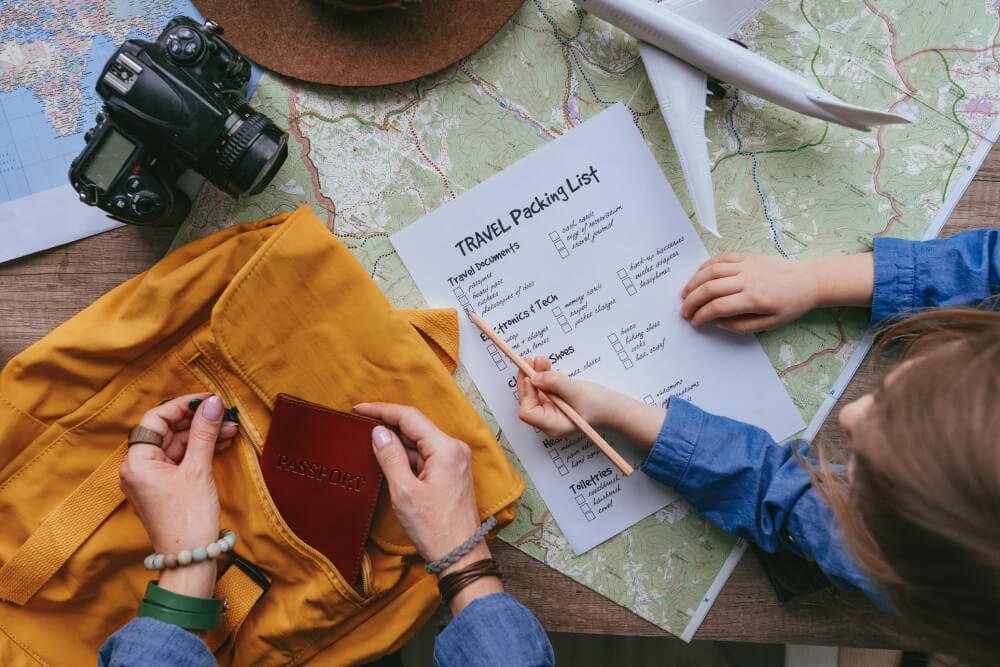
For a road trip, pack in three layers: the car itself (documents, emergency kit, phone chargers), a front-seat bag of things you'll reach for while driving (snacks, water, sunglasses, wipes), and your luggage for the nights away. The checklist below covers all three, plus add-on lists for road trips that include hiking and a short version for a weekend trip. Everything here fits a typical car without needing a roof box.
Before you pack: check the car
A road trip packing list starts with the vehicle. A few days before you leave:
- Tire pressure: NHTSA advises using the pressure on the vehicle's tire information label (usually on the driver's door edge or post, or in the owner's manual), not the maximum printed on the tire, and measuring when tires are cold. Check the spare too.
- Fluids and wipers: top up washer fluid and replace streaky wiper blades.
- Lights: walk around the car to check headlights, brake lights and turn signals.
- Service warnings: deal with any dashboard warning lights or overdue maintenance before a long drive.
- Roadside assistance: confirm whether your insurance, car manufacturer or a membership covers towing, and save the number in your phone.
Car documents and navigation
- Driver's license for every driver
- Vehicle registration and proof of insurance
- Rental agreement, if applicable
- Roadside assistance card
- Toll pass or transponder for the regions you'll drive through
- Offline maps downloaded on your phone, plus a paper road map for areas with poor signal
- Phone mount
- Car charger and charging cables for every device
Car emergency kit
Ready.gov suggests keeping these in the car in case you get stranded: jumper cables, flares or a reflective triangle, an ice scraper, a car phone charger, a blanket, a map and cat litter or sand for traction on ice. Round it out with items from its basic emergency kit list:
- Water and non-perishable food
- Flashlight and spare batteries
- First aid kit
- Jumper cables (also listed in Ready.gov's car-specific kit)
- Whistle
- Moist towelettes and garbage bags
- Duct tape and a multi-tool
- Backup battery for your phone
Also check that your spare tire, jack and lug wrench are in the car and that you know where they are stored.
The front-seat bag
Keep a small bag or bin within reach so nobody has to dig through the trunk at a rest stop:
- Refillable water bottles
- Snacks that don't melt or crumble easily (nuts, crackers, dried fruit, granola bars)
- Sunglasses
- Tissues, wet wipes and hand sanitizer
- A small trash bag
- Napkins or a roll of paper towels
- Lip balm and sunscreen
- Headphones, downloaded podcasts, audiobooks and playlists
- Any medicine you might need during the day
- Coins or a card for parking and tolls
Cooler and food
- Cooler with ice packs (refreeze them at hotels if you can)
- Sandwich supplies or pre-made meals for the first day
- Fruit and vegetables that travel well
- Reusable utensils, cups and a small cutting board
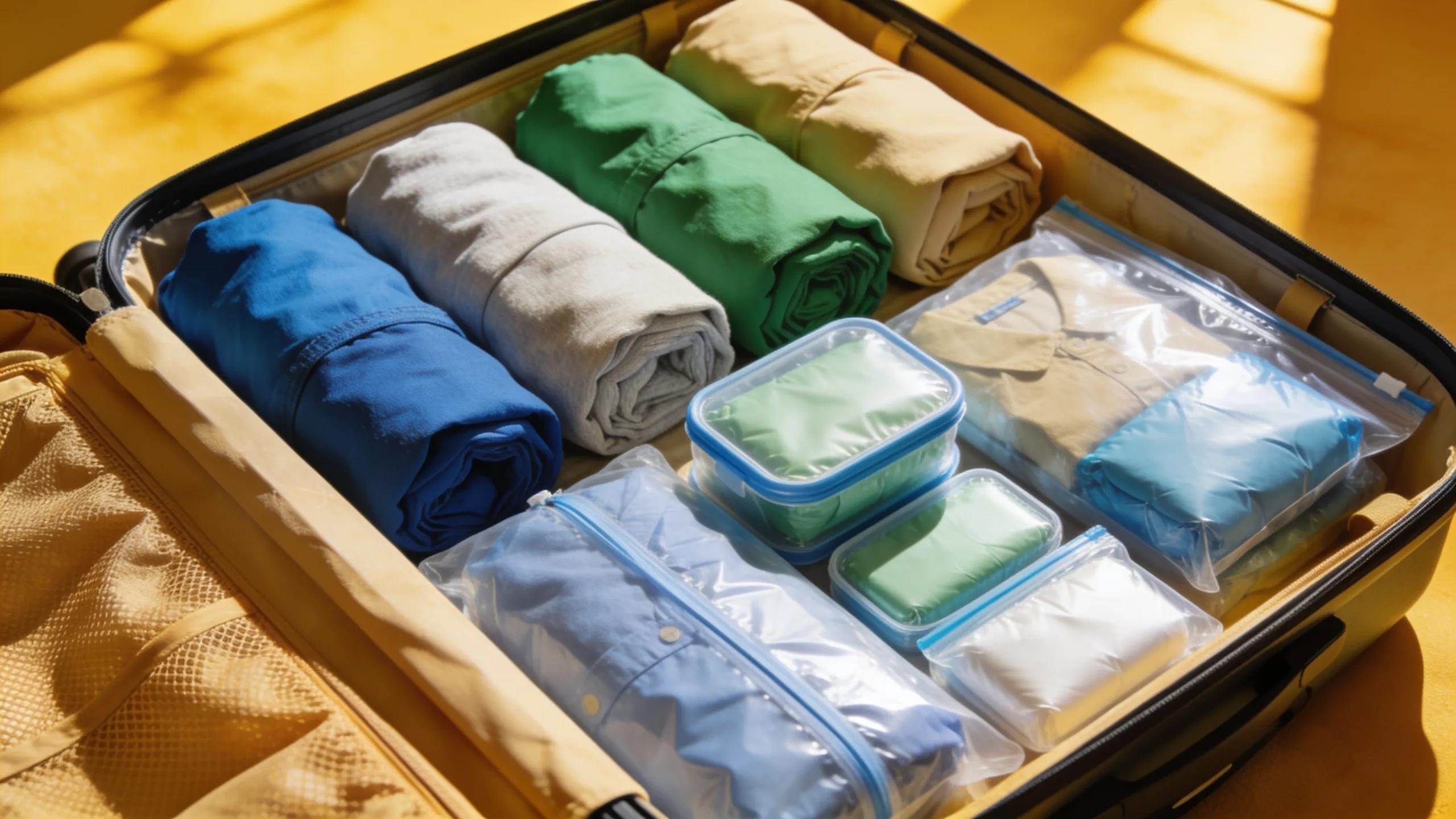
- Zip-top bags and a few food containers
- A gallon jug of water as a backup
Clothing
Pack for the weather at every stop, not just the destination. Mountain passes, deserts and coastlines can all be on one route.
- Comfortable driving clothes: soft layers and shoes that are easy to slip on and off
- One outfit per day, plus one spare
- A warm layer and a rain jacket
- Sleepwear and underwear
- Swimsuit if your lodging has a pool or you'll pass lakes or beaches
- Hat
- Walking shoes or sandals for stops
Tip: pack an "overnight bag" with one night's clothes and toiletries so you can leave the big suitcase in the car at one-night stops.
Toiletries and health
- Toothbrush, toothpaste, deodorant
- Shampoo and body wash (if your lodging doesn't supply them)
- Prescription medicines, with a few extra days' supply
- Pain reliever, allergy medicine, motion sickness remedy
- Insect repellent
- Toilet paper and a small trowel if you'll be in remote areas
Comfort and entertainment
- Travel pillow and a light blanket for passengers
- Sunshade for the windshield when parked
- Car games or a playlist everyone helped build
- Books or tablets with content downloaded in advance
- Camera
What to pack for a road trip with kids
- Correctly installed car seats or boosters for each child's age and size
- Activity bag for each child with books, sticker books and small toys
- Headphones and tablets with downloaded shows
- Extra snacks and a change of clothes in the car, not in the trunk
- Travel potty or plastic bags for emergencies with young children
- Window shades for the back seats
Never leave children or pets alone in a parked car, even for a short stop.
What to pack for a hiking trip along the way
If your route includes trails, pack a daypack based on the "Ten Essentials" the National Park Service recommends for minor injuries, sudden weather changes or emergencies:
- Navigation: map, compass or GPS, plus a paper map backup and a spare phone battery
- Sun protection: sunglasses, sunscreen and a hat
- Extra clothing: a layer for the worst conditions you might face, including a rain shell
- Illumination: a headlamp or flashlight with spare batteries
- First aid supplies, including personal medicines
- Fire: matches or a lighter and fire starters (check the park's fire rules)
- Repair kit and tools: duct tape, knife or multi-tool
- Nutrition: an extra day's worth of no-cook food
- Hydration: water and a way to treat water
- Emergency shelter: a space blanket, tarp or bivy
Add hiking shoes with good grip and moisture-wicking socks. Before you set out, check the park's website for conditions and tell someone your route and when you expect to be back.
How to pack for a weekend trip
A two- or three-night road trip only needs one bag per person. A compact list:
- Two to three tops, one or two bottoms
- One warm layer and one rain layer
- Sleepwear and underwear for each night
- One pair of walking shoes (wear them in the car) and sandals or nicer shoes
- A pre-packed toiletry kit
- Phone, charger and power bank
- Snacks, water bottle and sunglasses for the drive
Choose clothes that mix and match, and keep a toiletry kit permanently stocked so packing takes minutes.
How to load the car
- Heaviest items low and forward in the trunk, closest to the back seats.
- Things you'll need first on top: overnight bag, cooler, rain jackets.
- Keep sight lines clear: don't stack bags above the back seat or block mirrors.
- Secure loose items so they don't move in a sudden stop.
- Stay within your vehicle's load limit, shown on the tire and loading information label or in the owner's manual.
Before any long drive, check the weather and road conditions along your route, and plan rest stops so the driver can take regular breaks.
Sources: Ready.gov: car safety; National Park Service: the Ten Essentials; NHTSA: tire safety.